The One Thing No One Tells You About Mother & Father Wounding
Most people on a healing journey believe they have moved past their parents' patterns. They meditate, they do the inner work, they say with real conviction, "I am nothing like my mother" or "I am nothing like my father." And yet the same reactions keep showing up in their closest relationships: shutting down, getting defensive, feeling criticized when nothing critical was said.
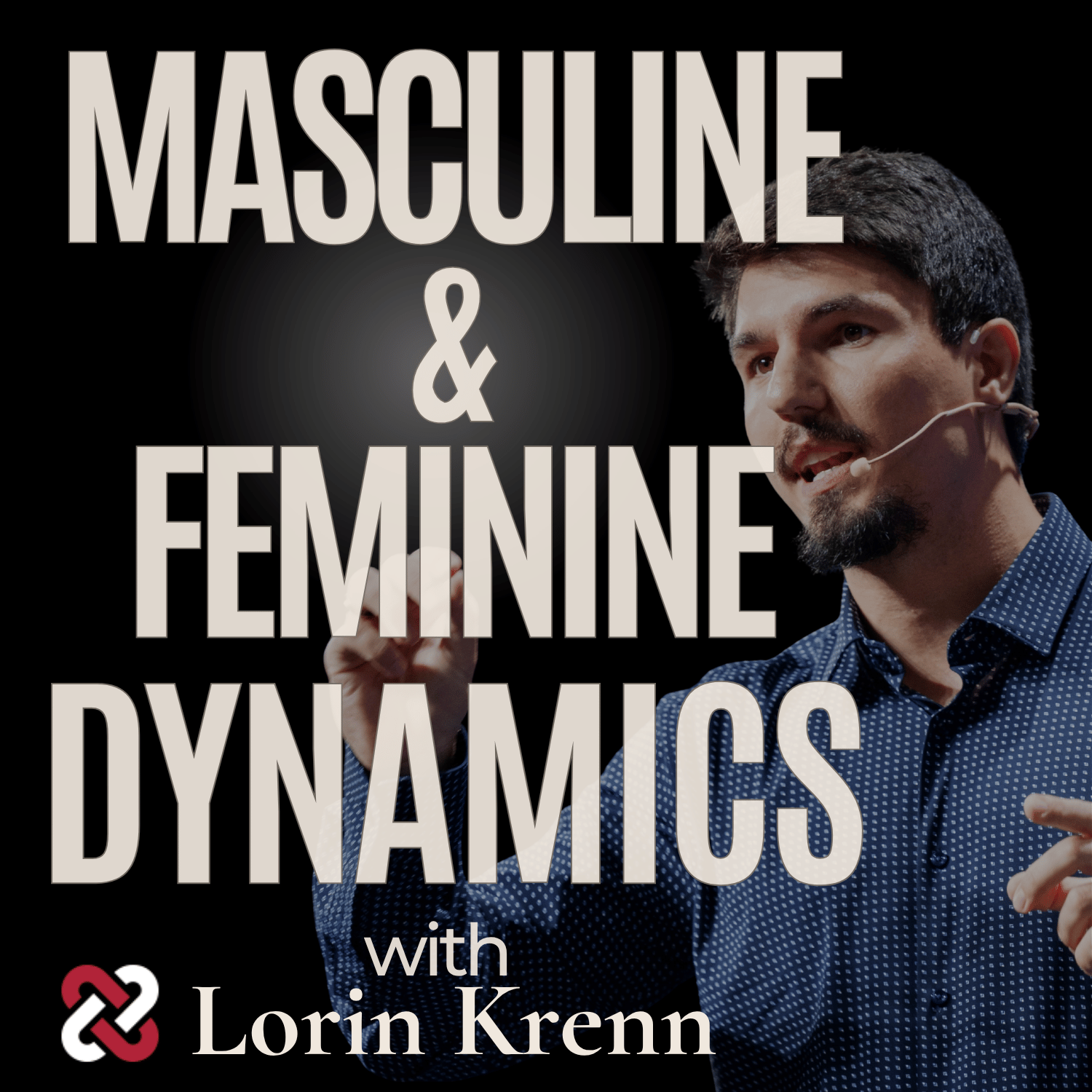
In this episode, Lorin breaks down one of the most overlooked layers of healing the mother and father wound: the unconscious imprints that get passed down and repeated, even by people who consciously tried to do the opposite of what their parents did.
Lorin shares a personal story about his father, who vowed never to repeat his own father's emotional absence and showed up far more present in many ways, yet still passed down a version of that same wound in a different form. This becomes the entry point for a wider look at two layers of healing: the work of addressing the relationship with a parent directly through boundaries, letting go of guilt, or cord cutting, and the much harder work of recognizing where their reactions, defensiveness, avoidance, the need to explain or defend yourself, have become part of your own.
Lorin walks through how to spot these patterns in daily life, why the shadow works so hard to keep them hidden, and what changes the moment they are brought into the light, both in yourself and with the people you love most.
He closes with two practical steps anyone can take to start identifying and working with their own imprint.
Mentioned in this episode:
How Old Souls Find Their True Purpose
A 2.5-hour live online workshop with Lorin Krenn
The Awakened Masculine Program
An 8-week immersive journey. For the man who is done repeating the same patterns in relationships, business, leadership, and life.
Transcript
Be mindful when you say with anger, I'm not like my mother, I'm not like my father.
Speaker A:There might be certain traits and patterns that you have adopted unconsciously.
Speaker A:These reactions that you have in relationships, when you shut down, when you become defensive, when you have very strong reactions to a partner or in the past, partners you had, that's the imprint of your mother and father.
Speaker A:And some of the most honest work we have to do is rather than just angrily say, I'm nothing like my mother or father, or look at where you resemble them.
Speaker A:Welcome to the core.
Speaker A:My name is Loreen Kren and I help people to get to the core of their deepest challenges in relationships, purpose and life, and to create real change at the root.
Speaker A:If you haven't subscribed yet, subscribe now so you never miss an episode.
Speaker A:Healing the mother and father wound is the foundational spiritual work because many people, they're on a path of healing, on a path of self awareness, on a path of growth and inner work.
Speaker A:But they bypass, not consciously but unconsciously working on their mother and father wounds.
Speaker A:Why?
Speaker A:Because these wounds are primal, as primal as they can get.
Speaker A:You can be incredible at meditating and do so many healing modalities, but at the same time truly setting a boundary with your mother, truly setting a boundary with your father.
Speaker A:No longer feeling guilt.
Speaker A:Maybe you felt a lot of guilt in your childhood, growing up, or you were told you were the difficult one, the challenging one, and you had to behave.
Speaker A:It's very hard because you have to override something inside you that is still loyal to your mother and father.
Speaker A:And that's some of the hardest work there is.
Speaker A:But today's episodes, really what I want to talk about is that there is an aspect of healing the mother and father wound that most people don't talk about.
Speaker A:And it's actually the hardest aspect of healing the wound and also some of the most rewarding ones because it changes your day to day life.
Speaker A:Specifically, it changes entirely how you show up in relationships.
Speaker A:So one aspect, aspect number one of healing the mother wound and father wound is to directly work on the relationship, whether your mother or father have already passed away or they're still alive.
Speaker A:Obviously it changes the work slightly.
Speaker A:But exercises such as cutting cords, not the cords entirely, but cutting the cords of all the negative patterns and dynamics and relationship challenges that have developed, really, I won't go too deep into.
Speaker A:That's a topic for another episode.
Speaker A:So that's one aspect or stage one of healing mother and father wounds is that you're working directly on the relationship with that person, all the things that perhaps all the needs your mother or father did not meet, right?
Speaker A:All the resentment, all the anger, all the pain, all the disappointment that you feel with them.
Speaker A:And you work with that directly.
Speaker A:And that's incredibly powerful and important work when it comes to healing the mother and father wand.
Speaker A:But there is a second aspect that many don't talk about.
Speaker A:And these are the imprints of how wounds with your mother and father show up in your unconscious reactions.
Speaker A:In relationships, these patterns have been ingrained.
Speaker A:Because here's the interesting thing.
Speaker A:In many ways we say we don't want to be like our father or mother if they showed up in a hurtful way.
Speaker A:I'm sure you've heard someone say, I'm never going to be like my father.
Speaker A:For instance.
Speaker A:Instance, my father passed away when I was 14 years old due to cancer.
Speaker A:3 Year long battle.
Speaker A:Some of the most challenging and painful times of my life.
Speaker A:So, long story short, it turned me into the person I am today.
Speaker A:It cracked my heart open, it allowed me to move through grief.
Speaker A:But that's a topic for another episode.
Speaker A:But my father's father, or my grandfather, was physically completely absent.
Speaker A:He only came home drunk.
Speaker A:And my father basically harbored so much anger towards his father.
Speaker A:And then his approach became, I never want to be like my father.
Speaker A:So even though he was physically there with me and of course showed up a million times better, and I love him for the man he was deeply.
Speaker A:I feel so much love inside my heart.
Speaker A:And it took a lot of work to get to this place.
Speaker A:But he tried.
Speaker A:He.
Speaker A:He said to me, laureen, you don't know how lucky you are.
Speaker A:My father never gave me the things that I give you now.
Speaker A:And this was interesting because his own father wound.
Speaker A:While the intention was genuine, I'm super grateful that he was physically present up until his death with me.
Speaker A:He was emotionally very absent, you see.
Speaker A:So in a way he resembled the traits of his father, even though deep inside he was absolutely sure that he was being the opposite of his father.
Speaker A:Why am I telling you this story?
Speaker A:It has a very specific reason, because be mindful when you say with anger, I'm not like my mother, I'm not like my father.
Speaker A:Yeah, you're right, you're not like them.
Speaker A:You are your own unique, beautiful soul.
Speaker A:But there might be certain traits and patterns that you have adopted unconsciously.
Speaker A:They've been ingrained, they're not yours.
Speaker A:But when you were so young, they became part of your identity.
Speaker A:They feel normal.
Speaker A:So, for example, one of the patterns I have ingrained or had ingrained is defensiveness and a sense of avoidance, avoidance of challenging emotions and defensiveness.
Speaker A:When, for instance, my wife brings up something challenging, that's the imprint of my mother and father wounding.
Speaker A:Or I give another example, when my wife would say something, I would take it as criticism and feel like a young little boy who's being shamed by his mother.
Speaker A:That's the imprint.
Speaker A:That's how it expresses itself.
Speaker A:So now I ask you, where in your life and how do you see it displayed and embodied in your relationships?
Speaker A:Where do you see that imprint?
Speaker A:You see it in those unconscious reactions, specifically when you seemingly lose all sense of consciousness and ability to make a clear choice to speak from your heart, to speak from a grounded place.
Speaker A:So these reactions that you have in relationships where, for instance, when you shut down, when you become defensive, when you have very strong reactions to a partner or in the past, partners you had, that's the imprint of your mother and father.
Speaker A:And some of the most honest work we have to do is rather than just angrily say, I'm nothing like my mother or father, look at where you resemble them.
Speaker A:And this is some really tough shadow work because now you have to look at how some of those parts became part of your identity unconsciously, you see, but you have to be willing to go there.
Speaker A:You have to be willing to see them.
Speaker A:So, for instance, my wife, wife made me aware of my patterns of defensiveness.
Speaker A:I know exactly where they come from, you see, and this is something I've watched growing up, seeing my parents argue, seeing that defensiveness and seeing that avoidance play out.
Speaker A:So now, even though I would call myself a very conscious man or mindful man who is doing a lot of deep work on himself, humbly so we are all or ever on the journey of healing.
Speaker A:I'm not fully healed, I'm not fully enlightened.
Speaker A:I'm none of that.
Speaker A:I'm just a humble man on the path and who is sharing and helping and being of service at the highest level.
Speaker A:That's how I see myself.
Speaker A:But when you have these reactions, these are these patterns inside you.
Speaker A:So one aspect is working on your boundaries with your mother and father, walking your own path.
Speaker A:Or if they've already passed away, you can still do a cord cutting exercise, you can write a letter to them, you can let go of the resentment.
Speaker A:The other element is, where do you resemble them?
Speaker A:And then go looking for your most unconscious reactions in your intimate life.
Speaker A:But truly, in all interpersonal relationships, and once you find them, you need to place your full focus on them because your shadow will try to avoid those.
Speaker A:Because this has been ingrained from such a young age on that it's, it's very uncomfortable to go there.
Speaker A:It's very uncomfortable to let go of these parts because it feels like letting go of a part of your identity.
Speaker A:You see, you're experiencing a sense of identity death.
Speaker A:So quite paradoxically, letting go of defensiveness takes all my energy, courage and focus.
Speaker A:Because a part inside me thought that is part of my identity that I have to defend myself at all costs, at all costs.
Speaker A:Which of course costs, trusts, intimacy, polarity.
Speaker A:It's something that is non sustainable for a relationship to thrive at the highest level.
Speaker A:So, but we made it unconsciously as part of our identity.
Speaker A:So letting go of these parts feels like letting go of parts of ourselves.
Speaker A:And that is the aspect that is the hardest.
Speaker A:Because a part inside you is still defending those parts.
Speaker A:A part inside you is still trying to hide those parts.
Speaker A:And that's your own shadow.
Speaker A:You need to understand that every pattern is like a life or has a life on its own, has a very limited intelligence.
Speaker A:Every limiting belief, everything on this earth here is trying to stay alive.
Speaker A:A negative thought, a limiting belief to reinforce itself.
Speaker A:That's how it stays alive in your consciousness, you see.
Speaker A:So if you let go of these parts, it feels enormously painful because these parts will pull pose as part of who you are.
Speaker A:I know this is slightly abstract, but stay with me here.
Speaker A:They will pose as part of your identity.
Speaker A:That is why you can do so much work on yourself, but you are still displaying those unconscious reactions in your most important relationships with your loved ones.
Speaker A:Because a part inside you is still protecting those reactions.
Speaker A:When you stop protecting those reactions and you start admitting to yourself what is really happening, that you are actually displaying patterns and traits of your mother or your father or both, that is when you break the spell in that moment, you take a lot of energy away from it.
Speaker A:You stop defending those, you stop avoiding or hiding, which is all the shadow, right?
Speaker A:It doesn't want to be integrated in the light.
Speaker A:It wants to survive, it wants to stay alive.
Speaker A:But it can only do so in the dark.
Speaker A:It can't do it in the light.
Speaker A:So I'm posing this question to you.
Speaker A:What are some traits and patterns that are inside you that you are displaying in relationships that you don't want to admit to yourself?
Speaker A:But they're there.
Speaker A:Doesn't mean you're bad, doesn't mean you're shameful, it doesn't mean you're doing something wrong, but it means the deepest spiritual work is to go looking for this and put all your focus there, because otherwise you can do so much work on yourself, but be dancing around those deeper patterns and traits.
Speaker A:And that can be quite intense.
Speaker A:It's incredibly confronting to really look in the mirror and say, wow, yeah, these traits, I feel so hurt and disappointed by, by my mother or father.
Speaker A:I've displayed them myself unconsciously and potentially even caused pain for others.
Speaker A:But when you get there, you access a deeper level of compassion, and not a compassion that says, I forget what has happened specifically if there was abuse, forget about this kind of forgiveness.
Speaker A:Forgiveness is for yourself.
Speaker A:You don't have to forgive anyone in the sense of that you allow them back into your life.
Speaker A:That is, it all depends on the context.
Speaker A:But it gives you a sense of compassion because you start to realize that we all display certain characteristics and patterns and unconscious reactions that, that are not glamorous, that are not enlightened, that are not super conscious, but that are potentially dark characteristics.
Speaker A:Right?
Speaker A:Someone becomes suddenly mean in an argument.
Speaker A:A person who is so loving suddenly becomes very mean.
Speaker A:And of course we have to understand if there's deliberate manipulation or perhaps even narcissism.
Speaker A:That's a whole different topic for a different episode here.
Speaker A:I'm really talking about this imprint of mother and father wounding ways we resemble our parents for the very thing we feel so disappointed and hurt by in the way they treated us and we displayed it ourselves and hurt others.
Speaker A:Until you face that part, the mother and father wound will stay alive in some shape or form inside you.
Speaker A:It's not just about the relationship with them.
Speaker A:If the first step you're taking is about the relationship with them, you know, letting go of that resentment whether they're alive or not.
Speaker A:But if they're alive, setting boundaries, no longer feeling guilty, no longer feeling responsible for caretaking, no longer having to do what they think is best for you, but walking your own path.
Speaker A:And then the second element is you go looking for those imprints.
Speaker A:And when you do that and when you work on them and when you focus on them, then you have the potential to completely shift your relationships.
Speaker A:And that will unlock a new level of freedom, depth and joy and expansion and peace and alignment.
Speaker A:Unlike anything.
Speaker A:Because it's not about getting rid of those reactions.
Speaker A:Ideally, you don't want to have them, right?
Speaker A:Ideally we just want to be perfectly healed.
Speaker A:But the journey can be long.
Speaker A:To clear certain imprint from us, all you need to be is be aware of them in the moment.
Speaker A:If you can do that, then they're almost Gone anyway.
Speaker A:If you have the capacity in a moment where you suddenly have a strong trigger and you become a five year old boy or five year old girl or ten or whatever, and have a strong reaction with a partner or within a relationship, but you become aware and you're able to soften your heart in that moment, wow.
Speaker A:A whole new layer that you or I didn't even know existed becomes available to you.
Speaker A:So much more freedom, so much more alignment, so much more intimacy, so much more trust.
Speaker A:This is some of the most honest shadow work that you can ever do.
Speaker A:Now, to give you even more practicality, how do you exactly find that imprint?
Speaker A:You might want to write this down.
Speaker A:You look for your strongest reactions.
Speaker A:For instance, when you're explaining yourself, when you're trying to prove something, when you are defending yourself, when you are showing shutting down, when you are feeling guilty, when you are feeling extremely anxious about the other person leaving you in that moment, these are usually all telltale signs that the imprint has become activated.
Speaker A:If you don't end the patterns that resemble the patterns and unconscious reactions and way of living of your mother and father inside yourself, then the mother or father wound cannot be fully healed to a large degree.
Speaker A:I don't like the word fully healed because as long as we breathe, we're on the healing journey.
Speaker A:But I'm talking about a specific threshold or a specific level of healing where it no longer has so much power over you and can hijack you and sabotage and cause pain and suffering.
Speaker A:Usually this is where most spiritual seekers stop.
Speaker A:Because most seekers, they want the instant gratification.
Speaker A:They want the identity, the identity of being spiritual.
Speaker A:I've been there.
Speaker A:I'm not calling others out, I'm calling myself out as well.
Speaker A:But the most honest work is when you can look in the mirror and say, wow.
Speaker A:In this way, I'm like my mother.
Speaker A:In this way I'm like my father.
Speaker A:You become aware and then you see it.
Speaker A:Because the thing is, what you see is, is no longer hidden.
Speaker A:Your shadow thrives in what is hidden.
Speaker A:If you're still trying to protect it or feel like it's part of your identity or it's just how you are, or whatever the excuse or language might be, then it's hidden.
Speaker A:And what is hidden has power over you.
Speaker A:What is hidden can sabotage your relationship, can sabotage your intimate life, can sabotage your abundance.
Speaker A:What is seen can no longer sabotage and impact you.
Speaker A:In the same way, it's not about just conceptually understanding, it's about really getting it.
Speaker A:Like, wow, okay, I'm displaying that Same trait that hurt me so much, and I'm causing that same pain for others.
Speaker A:It's tough.
Speaker A:I can't tell you how challenging that is.
Speaker A:I mean, it is really challenging.
Speaker A:I'm not going to sugarcoat it.
Speaker A:It's painful to look into the mirror and realize that in some way you are like your mother and father.
Speaker A:But it's so powerful when you can drop to that level of honesty with yourself and with your most beloved.
Speaker A:Or in the future, with your most beloved, if you're still on the journey of attracting your divine counterpart.
Speaker A:It's freeing, that humbleness where.
Speaker A:Because the real spiritual work is to go into that darkness, to go into these painful places, to explore them, to discover them, to unearth them, to no longer hide away from them.
Speaker A:It's beautiful to meditate, it's beautiful to do breath work.
Speaker A:It's beautiful to do psychedelics and to have all these altered states of consciousness.
Speaker A:But you know what's even more beautiful?
Speaker A:To go into the mud, to go into the places where it's the hardest and to emerge stronger, more conscious and filled with more compassion and love and service and connection to God, to the divine, to yourself, to the earth, to the great mother.
Speaker A:Set the boundaries of your mother and father.
Speaker A:Work on the resentment, guilt, disappointment, but also look at where you resemble them and then bring your full focus to it.
Speaker A:Write it down every single time it happens in a journal.
Speaker A:Jot that down.
Speaker A:Write it down every single time.
Speaker A:That reaction.
Speaker A:Go to your partner, if you're in a relationship right now and say, hey, I had this response.
Speaker A:This came from there, right?
Speaker A:Bring it out in the open.
Speaker A:It's confronting, it's raw, it's real.
Speaker A:But it's the real shadow work.
Speaker A:If you don't bring it to the light, it can't be integrated.
Speaker A:How does Carl Jung call it?
Speaker A:If you don't make the unconscious conscious, you will call it fate or something along those lines.
Speaker A:You can literally completely change the level of freedom and expansion that you feel in relationships and in your life overall.
Speaker A:It's not just in relationships, but it's expresses itself the most in our most intimate relationships, because that's where the wound was born, in relationship with the mother and father.
Speaker A:If you do this, if you give this your full focus, even for just a few weeks, things in your life will shift.
Speaker A:But the shadow is sneaky.
Speaker A:Maybe you understand it or you connect with it, and then two weeks later, you forget about all about.
Speaker A:It happened to me and I got defensive again.
Speaker A:My wife made me aware of it.
Speaker A:But what did I do.
Speaker A:Did I work on it with the same level I work on myself at the gym, eating, healthy breath, work, meditation, cold showers.
Speaker A:No, I didn't.
Speaker A:Why not?
Speaker A:Because a part may be inside is still protecting that.
Speaker A:That's what you need to find.
Speaker A:That's why you need to bring all that seeking and healing and desire to expand.
Speaker A:That's where you need to bring the energy because that's going to shift your entire life now.
Speaker A:There is much more to this, obviously.
Speaker A:I mean, this is.
Speaker A:This could be a 10 hour episode talking about cord cutting, shamanic practices, energetic practices of clearing that energy between your mother and father.
Speaker A:I use hypnosis.
Speaker A:I'm a hypnotherapist with archetypical journeys.
Speaker A:There's so many ways, direct boundary setting, in communication with your mother or father, if they're still alive, letter writings, then how to find that own imprint.
Speaker A:There is so much to it.
Speaker A:The deeper work, the exact how, the structured journey has no place in a podcast episode.
Speaker A:That will be in my deeper offerings, in my workshops, in my programs.
Speaker A:That's where I offer that work.
Speaker A:But if you find that imprint and you bring that same level of focus that you bring to other aspects of your life, wow.
Speaker A:Everything will change.
Speaker A:Everything.
Speaker A:I tell you now, you become much more humble in the process.
Speaker A:You become much more honest with yourself in the process.
Speaker A:Because as human beings, we deceive ourselves at such a high level.
Speaker A:I know it's hard to hear, it stings, but most people on a spiritual journey, we deceive ourselves because our shadow is so sneaky.
Speaker A:It just becomes another wrapper for our false identity.
Speaker A:Being spiritual and all of that, that's the honest work.
Speaker A:That's the most powerful work.
Speaker A:Thank you for listening.
Speaker A:Thank you for being here.
Speaker A:I cannot tell you what a joy it is to share this journey with you, to be of service.
Speaker A:This universe, this world is so beautiful that this is possible, this level of connection, this level of service, and that wherever you are right now, that you're able to receive this, and most likely at the perfect and right time, because you've listened to the whole episode, which means it resonated at a deeper level.
Speaker A:If you haven't subscribed yet, subscribe now.
Speaker A:So you never miss an episode.
Speaker A:It's such an honor to have you here.
Speaker A:Thank you.